Sarjapur Road vs JP Nagar 2026: Which Is Better to Buy?
Published 18 Jul 2026 · Last updated 18 Jul 2026
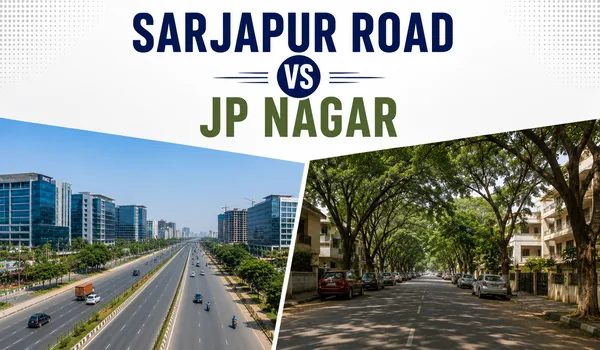
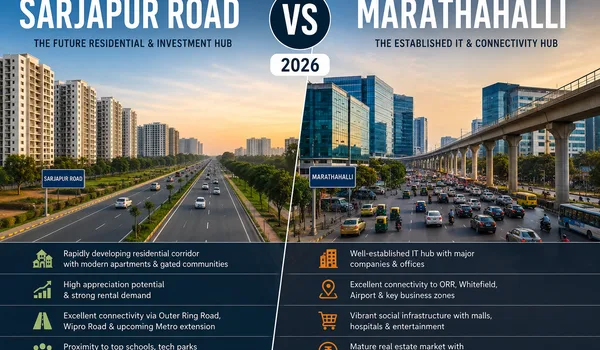
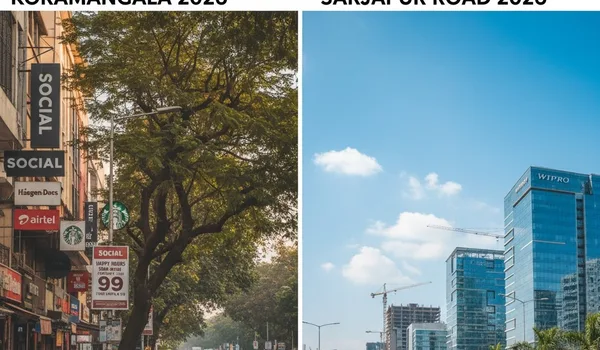
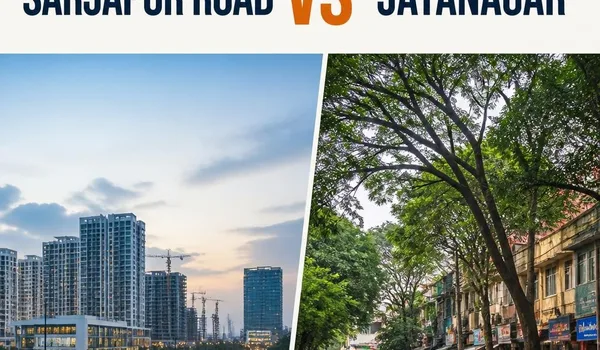
Sarjapur Road and JP Nagar are both south Bengaluru residential markets, yet they attract different buyer profiles in 2026. JP Nagar is a BBMP-planned residential layout spread across nine phases along the Bannerghatta Road corridor, known for wide internal roads, good schools, a strong family culture and Green Line metro access at Jayadeva Hospital and JP Nagar stations. Sarjapur Road is the outer east growth corridor where buyers trade centrality for considerably more carpet area, brand-new gated communities, IT-park proximity and the forward-looking catalyst of an approved Namma Metro Phase 3A line. For a planned south Bengaluru address with metro access today, JP Nagar is a solid choice; for value-led growth with larger homes and modern amenities, Sarjapur Road is the stronger long-term play.
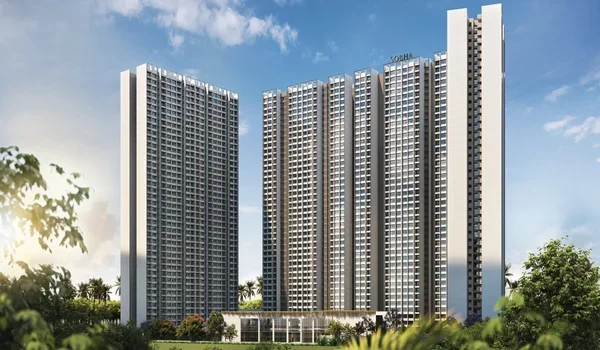
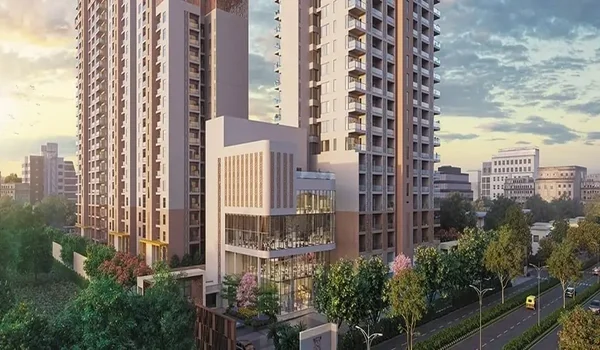
Our featured pre-launch on the growth corridor, Prestige Sarjapur Road by Prestige Group, offers 1, 2 and 3 BHK homes from about ₹68.25 L at Ittangur. This guide compares both locations on price, appreciation, rental yield, connectivity and lifestyle so you can decide with data rather than guesswork.
Sarjapur Road vs JP Nagar 2026 Comparison Overview
| Factor | Sarjapur Road | JP Nagar |
|---|---|---|
| Avg price (indicative) | ₹9,500 – ₹14,500 / sq ft | ~₹8,000 – ₹13,000 / sq ft |
| Recent appreciation | Higher, off a lower base | Steady, mature planned layout |
| Gross rental yield | ~3.5% – 4.5% | ~3% – 4% |
| Metro status | Approved Sarjapur–Hebbal line (to be built) | Green Line operational (Jayadeva Hospital, JP Nagar stations) |
| Key employment | ORR tech parks, Electronic City | South Bengaluru offices, Bannerghatta Road corridor |
| Housing stock | Newer gated communities, larger units | Mix of older and newer apartments, some gated projects |
| Best for | Value, space, IT commute, appreciation | Planned layout, metro access, family living |
What's the Quick Verdict?
JP Nagar is a mature, planned south Bengaluru market with wide roads, good schools, an operational Green Line metro and a range of apartment options from older stock to newer projects. Sarjapur Road is the outer east growth corridor where buyers pay a slightly higher rate per sq ft but get considerably more carpet area, a newer gated community and direct IT-park access. The right choice depends on your commute direction and whether you value established city infrastructure or growth-corridor upside.
Choose JP Nagar if you work in south or south-west Bengaluru, want metro access today, value a planned residential layout with wide roads and reputed schools, and are flexible on apartment age and size. Choose Sarjapur Road if you work in the ORR IT parks, want a larger flat in a brand-new gated community and are positioning for the upside the approved Phase 3A metro will deliver. Bottom line: JP Nagar for planned south Bengaluru living with metro access now; Sarjapur Road for value, scale and long-term appreciation.
Location and Connectivity
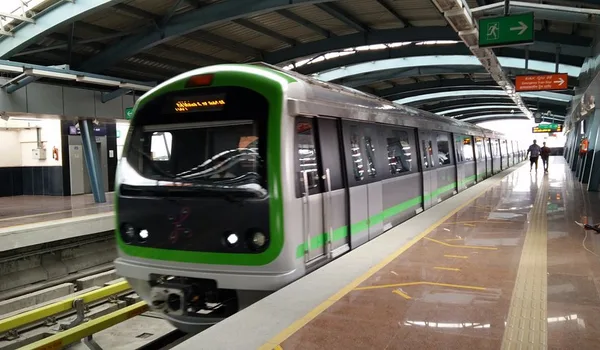
JP Nagar stretches along the Bannerghatta Road corridor in south Bengaluru, roughly 10 to 15 km from MG Road. Its planned BBMP layout gives it wide internal roads and organised phase-wise development, making navigation easy and the neighbourhood feel orderly. The key transit advantage JP Nagar holds is access to the operational Namma Metro Green Line at Jayadeva Hospital station and JP Nagar station, connecting residents to the north-south rail spine running from Nagasandra through the city centre down to Silk Institute. The Bannerghatta Road corridor also provides access to IIMB, several hospitals and the National Games Village complex.
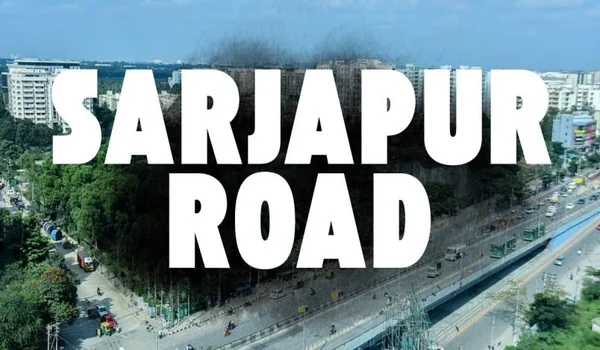
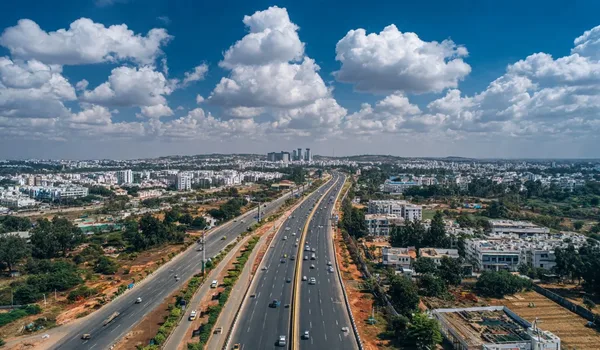
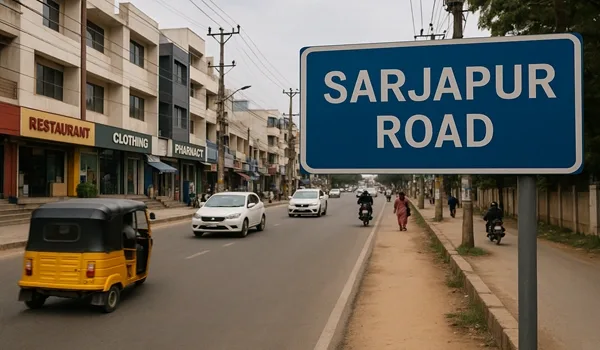
Sarjapur Road runs south-east from the ORR junction, placing residents within 10 to 20 minutes of the major ORR tech parks: Embassy Tech Village, RMZ Ecoworld, Cessna Business Park and Wipro SEZ. The approved Phase 3A metro line from Sarjapur to Hebbal, when operational, will link the corridor to Bengaluru's wider rail network. Road connectivity to the ORR IT campuses is already strong today. Bottom line: JP Nagar leads on transit today with its operational Green Line stations; Sarjapur Road's approved Phase 3A is the long-term rail connector.
Price Comparison: How Far Does Your Budget Go?
JP Nagar is generally cheaper per sq ft than Sarjapur Road, particularly in the older phases where resale stock dominates. However, newer projects in JP Nagar phases 7 and 8 have narrowed the gap significantly. On Sarjapur Road, the inventory is almost entirely new-launch or under-construction, offering full amenity decks and larger unit sizes within a similar or slightly higher ticket range.
| Configuration | Sarjapur Road (indicative) | JP Nagar (indicative) |
|---|---|---|
| Average ₹ / sq ft | ~₹12,000 | ~₹10,500 |
| 2 BHK | ~₹85 L – ₹1.4 Cr | ~₹70 L – ₹1.1 Cr |
| 3 BHK | ~₹1.3 Cr – ₹2.6 Cr | ~₹1.1 Cr – ₹2 Cr |
| Entry ticket | From ₹68.25 L (Prestige Sarjapur Road) | From ~₹65 L (older resale stock) |
In practice, the same budget on Sarjapur Road secures a larger carpet area in a new gated community with a project-level amenity deck. JP Nagar at a similar or lower ticket typically delivers a smaller unit, often in an older building with limited shared amenities. Bottom line: Sarjapur Road delivers more space and newer infrastructure for a broadly similar or slightly higher per-sq-ft investment.
Appreciation and Rental Yield
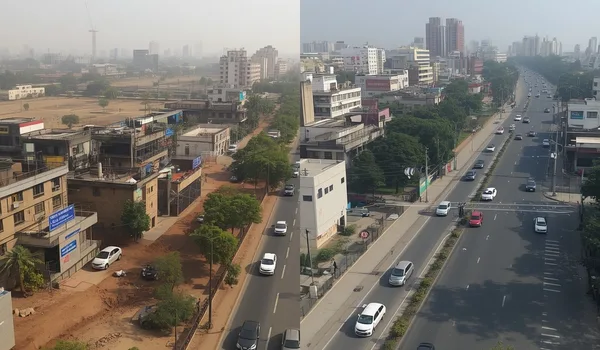
Sarjapur Road has outpaced JP Nagar on price appreciation in recent years because it is an earlier-stage corridor with active IT demand, regular new launches from reputed developers and buyers positioning ahead of the Phase 3A metro. JP Nagar is a mature planned layout where appreciation is consistent but the market is more settled, limiting the per-rupee upside for a new buyer compared to a growth corridor where multiple tailwinds are still building.
On rental yield, Sarjapur Road benefits from a deep pool of IT tenants preferring 2 and 3 BHK units in gated communities, generating indicative gross yields of 3.5 to 4.5 percent. JP Nagar draws a broader tenant mix including families, professionals working in south Bengaluru institutions and students near IIMB, with indicative yields around 3 to 4 percent. For a total-return investor, Sarjapur Road's lower effective entry price per carpet area, stronger appreciation trajectory and higher yield make it the better-performing pick. Bottom line: Sarjapur Road offers stronger appreciation and rental yield; JP Nagar provides steady income from a broad, established tenant base in a well-planned residential environment.
Lifestyle and Social Infrastructure
JP Nagar is widely regarded as one of south Bengaluru's most liveable planned localities. Wide BBMP roads, consistent plot-wise development and organised commercial areas along 15th Cross and 24th Main give it an orderly feel that many families value over the more organic development patterns of older Bengaluru neighbourhoods. Reputed schools in the vicinity include DPS South, National Public School and Vidyashilp, and the proximity to Jayadeva Institute of Cardiovascular Sciences, Fortis Hospital Bannerghatta Road and Apollo BGS Hospital makes it strong on healthcare access. The National Games Village, Turahalli Forest and Bannerghatta Biological Park nearby add greenery and recreation options.
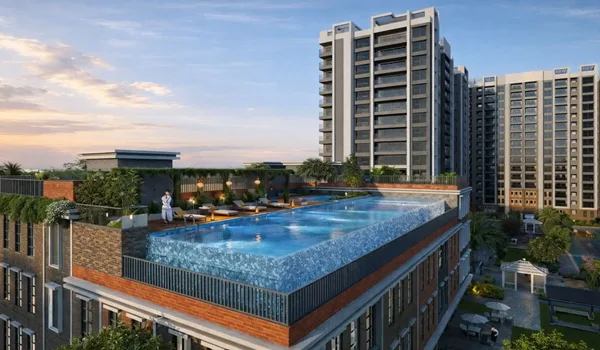
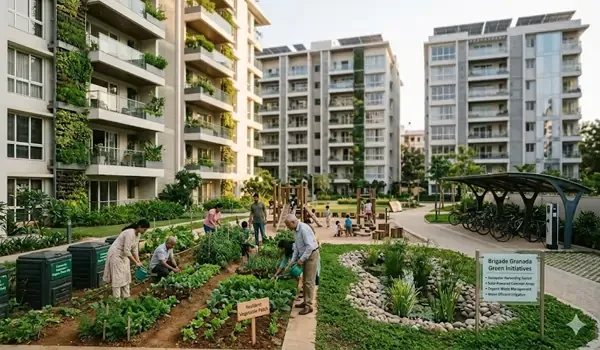
Sarjapur Road has developed strong social infrastructure over the past decade: international schools such as Greenwood High and Inventure Academy, hospitals including Sakra World Hospital and Narayana Health, and retail destinations like Phoenix Marketcity and Market Square Mall all serve the corridor. What Sarjapur Road uniquely offers is large-format gated communities with project-level amenities, including clubhouses, swimming pools, sports courts and landscaped open spaces, which are scarce in JP Nagar's mostly smaller-project inventory. Bottom line: JP Nagar wins on planned layout, wide roads and proximity to south Bengaluru institutions; Sarjapur Road wins on gated-community scale, modern amenities and newer housing stock.
Which Should You Buy in 2026?
Choose JP Nagar if you commute to south or south-west Bengaluru offices, value an operational Green Line metro today, want a planned residential layout with reputed schools and hospitals nearby, and are comfortable with a mix of older and newer apartment stock. Ensure any project is K-RERA-registered and verify building age and maintenance history for resale purchases.
Choose Sarjapur Road if you work in the ORR IT parks, want more carpet area for your budget, prefer a brand-new gated community with a full amenity deck and want to be positioned for the metro-era upside the approved Phase 3A line will deliver. To explore early-entry options, compare Prestige Sarjapur Road's price list and floor plans, or read the wider Sarjapur Road guide. Bottom line: buy JP Nagar for today's metro and planned south Bengaluru lifestyle; buy Sarjapur Road for value, space and long-term growth.
Frequently Asked Questions
1. Is Sarjapur Road or JP Nagar better to buy in 2026?
Sarjapur Road suits buyers who want newer gated communities, larger carpet area and direct IT-park access with an approved metro upside; JP Nagar suits those who want a planned south Bengaluru residential layout with good schools, an operational Green Line metro nearby and a slightly lower entry price. Both are strong south Bengaluru markets but serve different commute and lifestyle needs.
2. Which is cheaper, Sarjapur Road or JP Nagar?
JP Nagar is slightly cheaper, with Grade-A apartments in an indicative range of about ₹8,000 to ₹13,000 per sq ft, while Sarjapur Road typically trades between ₹9,500 and ₹14,500 per sq ft. Both figures are indicative for 2026 and should be verified with each developer before booking.
3. Does Sarjapur Road or JP Nagar have better metro connectivity?
JP Nagar has the Green Line metro nearby with Jayadeva Hospital and JP Nagar stations providing rail access today. Sarjapur Road has the approved Namma Metro Phase 3A Sarjapur-to-Hebbal line as a future catalyst.
4. Which location has higher rental yield?
Both markets attract steady tenant demand; indicative gross yields run at roughly 3.5 to 4.5 percent on Sarjapur Road and 3 to 4 percent in JP Nagar. Sarjapur Road benefits from a concentrated pool of IT tenants who prefer larger 2 and 3 BHK units in gated communities.
5. Which area appreciates faster, Sarjapur Road or JP Nagar?
Sarjapur Road has delivered stronger recent appreciation off a lower base, driven by active IT employment growth along the ORR and the approved metro line. JP Nagar is a mature, planned market where appreciation is steady but limited by a high base and constrained new supply.
6. Who should buy in JP Nagar versus Sarjapur Road?
Buyers who work in south or south-west Bengaluru and value a planned residential layout with nearby metro access and established schools typically prefer JP Nagar. Those working in the ORR IT parks who want larger homes, newer amenities and a stronger growth trajectory usually choose Sarjapur Road.
Conclusion
The 2026 Sarjapur Road vs JP Nagar decision turns on commute direction, housing preference and investment outlook. JP Nagar delivers a well-planned south Bengaluru residential address, operational Green Line metro access, good schools and an orderly neighbourhood environment at a slightly lower per-sq-ft rate, though largely in older or smaller apartment stock with limited gated-community scale. Sarjapur Road delivers a larger flat in a brand-new gated community, direct ORR IT-park connectivity and the forward-looking catalyst of an approved Namma Metro line. For buyers who want value-led early entry on the growth corridor, compare Prestige Sarjapur Road's price list and floor plans, then book a site visit through the contact page to lock an EOI slot before the public launch.
Prestige Sarjapur Road Blog