Renting vs Buying an Apartment in Sarjapur Road 2026
Published 06 Jul 2026 · Last updated 06 Jul 2026
Rent or buy is the first real decision for anyone settling on Sarjapur Road, and it is less about the market than about your own timeline and finances. Renting keeps you flexible and light on upfront cost; buying builds equity and pins you to a place. Neither is simply right — the honest answer turns on how long you plan to stay, what you can afford upfront, and what you would do with the money you did not lock into a home. This guide compares the two on cost, not slogans, so you can decide with numbers.
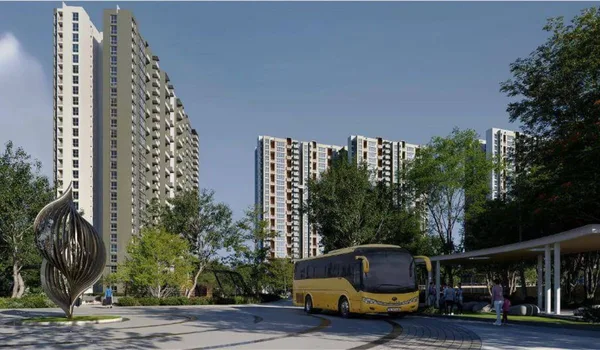
The worked figures use our featured pre-launch, Prestige Sarjapur Road by Prestige Group, with 1, 2 and 3 BHK homes from about ₹68.25 L at Ittangur, as the ownership example. For the wider corridor, see our Sarjapur Road guide. Rents, EMIs and appreciation here are indicative illustrations; only current market rents and a lender's sanction are final.
The Rent vs Buy Question
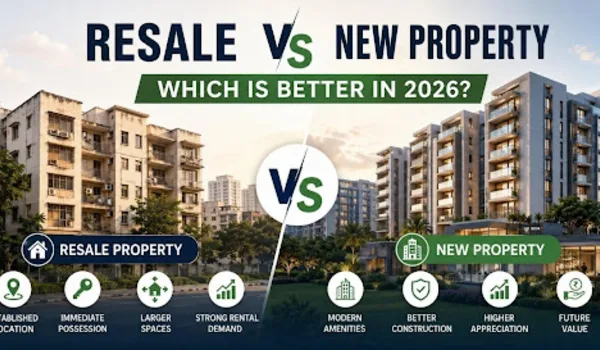
Framed simply, renting is paying for the use of a home while owning is paying to acquire it. A tenant pays rent and a deposit and can move on short notice; an owner pays a down payment, an EMI and upkeep, and gains an asset that may grow in value. The comparison is not rent versus EMI alone — it is the full cost of renting over your stay against the full cost of owning over the same period, net of the equity and any appreciation you keep at the end.
Because owning carries a large upfront cost and selling takes time and money, the maths swings on how long you hold. A short stay rarely recovers the buying costs; a long one usually does. Bottom line: the decision hinges on your holding period — compare the total cost of each over the years you actually plan to stay.
The Real Cost of Renting
Renting looks cheap month to month, and upfront it genuinely is: a security deposit plus the first month's rent, and you are in. There is no down payment, no stamp duty, no maintenance corpus and no responsibility for major repairs. That low entry cost and the freedom to relocate are renting's real advantages, especially early in a career or when a job might move you.
The catch is that rent is a pure expense — none of it comes back — and it rises over time as landlords revise it, typically each year. Over a long stay those rising payments add up with nothing to show at the end. The table sketches how indicative rent accumulates as it escalates.
| Period | Indicative monthly rent | Approx cumulative rent paid |
|---|---|---|
| Year 1 | ~₹30,000 | ~₹3.6 lakh |
| Year 5 | ~₹38,000 (after annual rises) | ~₹20 lakh |
| Year 10 | ~₹48,000 (after annual rises) | ~₹47 lakh |
Bottom line: renting wins on low upfront cost and flexibility, but the money leaves for good and the monthly figure climbs year after year.
The Real Cost of Owning
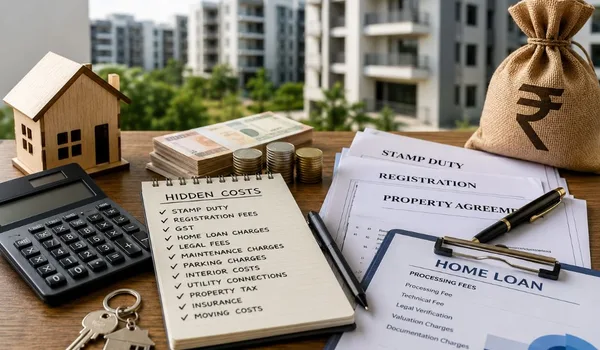
Owning front-loads the cost. You pay a down payment of about 20% or more of the price, plus stamp duty, registration and smaller charges, then an EMI that at first often runs higher than the rent for a similar home. On top sit maintenance charges and property tax. That is the case against buying in the early years — it is simply more expensive up front and month to month.
What flips it is equity and appreciation. Every EMI repays part of the principal, so a share of each payment becomes yours rather than the landlord's, and the home itself may rise in value over a long hold. By the end of the loan you own an asset outright; a renter over the same years owns nothing. The table contrasts the two cost profiles at a glance.
| Factor | Renting | Buying |
|---|---|---|
| Upfront cost | Deposit + first month | ~20%+ down payment + charges |
| Monthly outgo | Rent (rises yearly) | EMI + maintenance + tax |
| Builds equity | No | Yes, via principal repaid |
| Flexibility to move | High | Low, selling takes time |
| End of period | No asset | Owns the home |
Bottom line: owning costs more early but converts monthly outgo into equity, so the longer you hold, the better it compares with renting.
The Break-even Timeline
The break-even point is the number of years at which the cost of owning, after subtracting the equity you have built and any appreciation, drops below what you would have spent renting over the same stretch. Before that point renting is cheaper; after it, buying pulls ahead and keeps widening the gap. The exact year depends on the price, your loan rate, how fast rents rise and how the home appreciates.
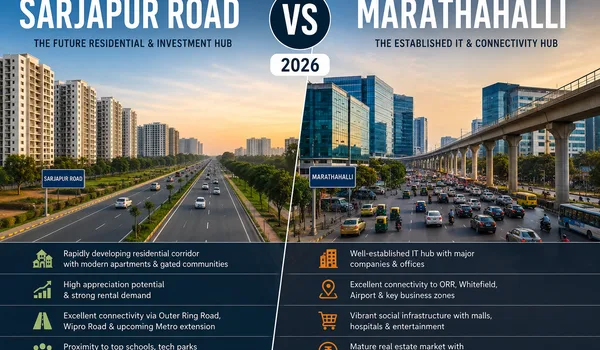
On an active Bengaluru corridor like this one, where rents escalate and demand from the tech belt supports values, the break-even for an entry apartment typically lands in the medium term rather than the short term. If you are confident of staying past it, buying is usually the stronger financial call. Bottom line: estimate your break-even year and be honest about whether your stay comfortably clears it.
When Renting Makes Sense
Renting is the better choice more often than buyers admit. If your stay is short or uncertain, if your job might relocate you, or if you value flexibility and want to keep upfront cash free, renting fits. It also suits anyone still building a down payment or a credit profile, since it avoids locking a large sum into an illiquid asset you may need to sell in a hurry.
There is an investment angle too: the money not tied up in a down payment and EMI can be invested elsewhere, and for a short horizon that can outpace what a home would have gained net of buying and selling costs. Bottom line: rent when your horizon is short or unsettled, your upfront funds are thin, or you want to stay mobile and liquid.
When Buying Makes Sense
Buying makes sense when you expect to stay well past the break-even point, your income comfortably supports the EMI, and you have the down payment plus charges without draining your safety net. A stable job, a settled family plan and a clear intent to put down roots all tilt the decision toward owning. The equity you build and the prospect of appreciation then work in your favour over the long hold.
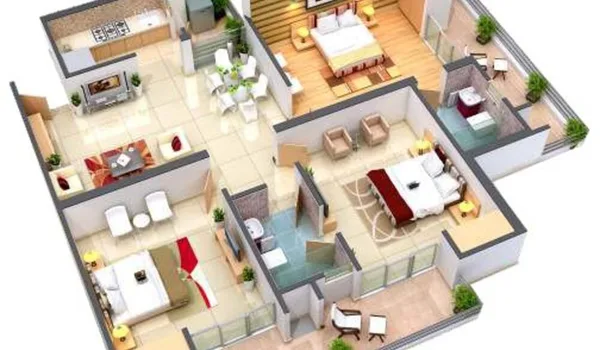
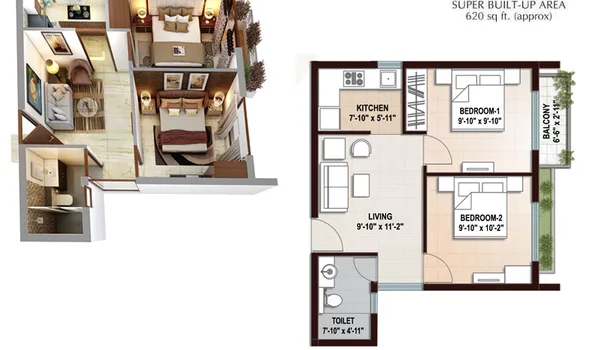
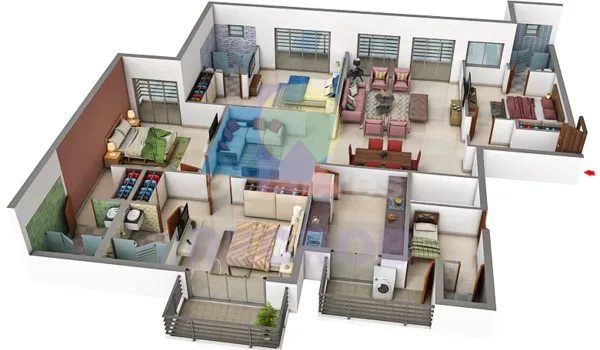
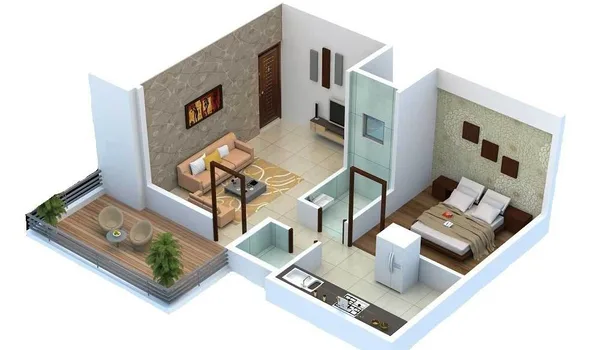
If you are buying, confirm the project's K-RERA status and compare live prices before you commit. Demand across Bengaluru's Sarjapur Road corridor is supported by the nearby tech belt, which helps both end-use and resale. Review the configuration-wise price list and the floor plans, then request a written cost sheet through the contact page. Bottom line: buy when you will stay long, the EMI fits your income and the upfront cost does not strain you.
Frequently Asked Questions
1. Is it better to rent or buy an apartment in Sarjapur Road?
It depends on how long you will stay. Renting suits a short horizon of a few years, while buying usually wins if you hold the home long enough to pass the break-even point, thanks to equity and appreciation.
2. Is EMI higher than rent on Sarjapur Road?
Usually yes at first. A home loan EMI on an entry apartment often runs higher than the rent for a similar unit, but the EMI builds equity while rent does not, and rent tends to rise over time.
3. What is the break-even point when buying beats renting?
It is the number of years after which the cost of owning, net of equity built, falls below the cost of having rented. On this corridor it typically lands in the medium term, so a longer stay favours buying.
4. When does renting make more sense?
Renting fits a short or uncertain stay, a job that may relocate you, or when you want flexibility and low upfront cost. It avoids the down payment, stamp duty and the effort of selling later.
5. Does buying build wealth better than renting?
Over a long horizon, owning generally builds wealth because each EMI adds equity and the home may appreciate, while rent is a pure expense. The trade-off is a large upfront cost and lower liquidity.
6. How much should I budget upfront to buy instead of rent?
Plan a down payment of about 20% or more of the price, plus stamp duty, registration and smaller charges. Renting instead needs only a deposit and the first month, which is why it suits short stays.
Conclusion
Renting versus buying on Sarjapur Road in 2026 comes down to your holding period and your finances, not a blanket rule. Renting keeps you flexible and light on upfront cost, but the money is gone and the rent climbs each year. Buying costs more early and ties you down, yet each EMI builds equity and a long hold usually clears the break-even point where owning pulls ahead. Be honest about how long you will stay and whether the EMI and down payment fit comfortably. If you lean toward buying, confirm K-RERA status, review Prestige Sarjapur Road's price list and floor plans, and request a written cost sheet through the contact page before you commit.
Prestige Sarjapur Road Blog