Apartment Resale & Capital Gains Tax Guide for Sarjapur Road Sellers 2026
Published 14 Jul 2026 · Last updated 14 Jul 2026

Selling an apartment on Sarjapur Road is not just a property transaction — it is also a tax event. The profit you make is classified as a capital gain and is taxed differently depending on how long you held the property, with a further layer of complexity added by the Finance Act 2024 which changed how long-term gains on property are taxed from July 23, 2024 onwards. Buyers who plan to sell now or in the next few years need to understand the holding-period rule, the cost inflation index, the main exemptions available, and the TDS obligation the buyer must fulfill at registration. This guide covers each of those as a general framework; the specifics of your situation must be worked out with a chartered accountant.
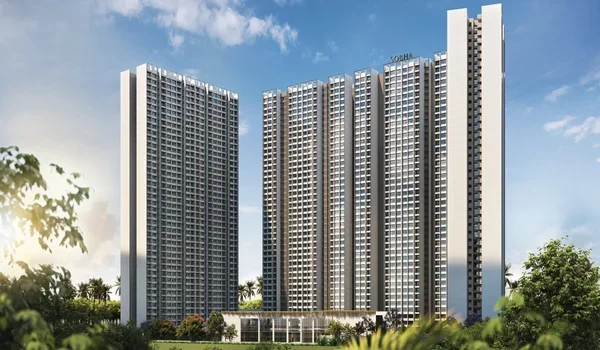
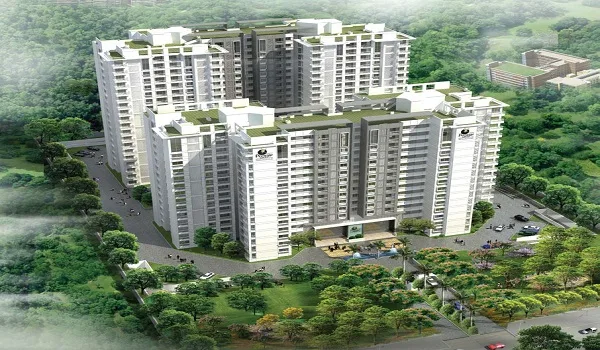
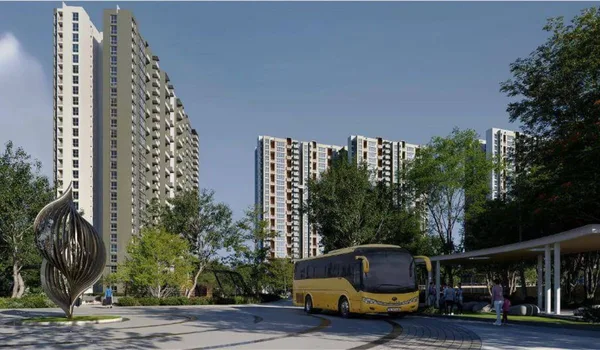
The context here is our featured pre-launch, Prestige Sarjapur Road by Prestige Group, with 1, 2 and 3 BHK homes from about ₹68.25 L at Ittangur on Sarjapur Road. Tax rates, CII values and exemption conditions are governed by the Income Tax Act 1961 and notified annually or amended by Finance Acts; the figures used below are illustrative, not a substitute for professional tax advice.
Why Selling an Apartment Triggers a Capital Gains Tax Event
Under Indian income-tax law, a capital asset is any property of any kind held by a taxpayer, and the profit arising on its transfer — sale, exchange or relinquishment — is a capital gain. Residential apartments fall squarely in this definition. The key variable is the holding period, because it determines whether the gain is classified as short-term or long-term, which in turn determines the tax rate. Unlike salary income where TDS is deducted by an employer, capital gains from property are largely self-reported by the seller through the annual income-tax return, with one important buyer-side deduction at the time of registration.
The cost of acquisition for a property bought directly is usually the total consideration paid including registration charges and stamp duty, but not the home-loan interest (which is claimed separately under Section 24(b) if you use the old tax regime). Any documented capital improvement expenditure — such as structural renovation with proper invoices — can also be added to the cost, reducing the eventual gain. Accurate records of all payments from the date of purchase are therefore essential for a clean capital gains computation years later.
Short-Term vs Long-Term Capital Gains on Property
The dividing line is 24 months of holding. If you sell a residential apartment more than two years after the date of purchase (measured from the date of the purchase deed or allotment letter), any gain is long-term capital gains (LTCG). If you sell within two years, the gain is short-term capital gains (STCG), which is added to your total income for that year and taxed at your applicable income-tax slab rate — potentially up to 30% for those in the highest bracket, plus applicable surcharge and a 4% health and education cess.
For LTCG, the rate and method depend on when the property was acquired — a distinction introduced by the Finance Act 2024. For under-construction properties, the holding period is typically measured from the date of the registered purchase agreement or allotment, not from the date of possession, though this may vary by circumstance; confirm with your chartered accountant.
| Feature | Short-Term Capital Gains (STCG) | Long-Term Capital Gains (LTCG) |
|---|---|---|
| Holding period | Up to 24 months from purchase | More than 24 months from purchase |
| Tax rate | Added to total income; taxed at applicable slab (up to 30%) plus surcharge and 4% cess | 20% with indexation OR 12.5% without indexation — see Budget 2024 note (plus surcharge and 4% cess) |
| Cost inflation index (indexation) | Not available | Available under the 20% route; not applicable under the 12.5% route |
| Key exemptions | None under capital-gains provisions | Section 54 (reinvest in residential property) and Section 54EC (invest in specified bonds) |
Indexed Cost of Acquisition and How It Reduces LTCG
When computing LTCG under the 20% route, the government allows you to inflate your original purchase price using the Cost Inflation Index (CII). The CII is a number notified each year by the Central Board of Direct Taxes (CBDT) to approximately track consumer price inflation. The formula is: Indexed Cost = Actual Purchase Cost × (CII of Sale Year ÷ CII of Purchase Year). Because the CII grows over time, the indexed cost is higher than the original cost, which reduces the taxable gain and therefore the tax.
For property acquired before April 1, 2001, the cost of acquisition may be taken as the fair market value as of April 1, 2001, as estimated by a registered valuer. The CII base year is 2001-02 = 100. The table below illustrates how indexation works on hypothetical numbers; verify actual CII values with the CBDT's published notification for the relevant years.
| Detail | Illustrative figures |
|---|---|
| Purchase year | 2018-19 (CII: 280) |
| Sale year | 2025-26 (CII: 363) |
| Original purchase price | Rs 60,00,000 |
| Indexed cost of acquisition | Rs 60,00,000 × (363 ÷ 280) ≈ Rs 77,78,571 |
| Sale price | Rs 95,00,000 |
| LTCG without indexation (12.5% route) | Rs 95,00,000 − Rs 60,00,000 = Rs 35,00,000; tax ≈ Rs 4,37,500 + cess |
| LTCG with indexation (20% route) | Rs 95,00,000 − Rs 77,78,571 ≈ Rs 17,21,429; tax ≈ Rs 3,44,286 + cess |
Exemptions That Can Reduce Your Capital Gains Tax
The Income Tax Act offers two main exemptions for long-term capital gains on a residential property sale. Both require the gain to be reinvested within a specific window, and the conditions must be met exactly — partial compliance results in proportionate, not full, exemption, and failing to complete reinvestment reverses the benefit.
Section 54 is the most commonly used. If you reinvest the LTCG amount (not the full sale price) in one new residential property in India, you can exempt the reinvested portion from tax. The new property must be purchased within one year before the sale or two years after it, or constructed within three years after the sale. From the Union Budget 2023, the maximum exemption under Section 54 is capped at Rs 10 crore. If you cannot reinvest the gain before your income-tax return filing deadline, deposit the amount in a Capital Gains Account Scheme (CGAS) with an approved bank first — this preserves the exemption window while you search for a property.
Section 54EC offers an alternative without buying another property: invest the LTCG amount (not the full sale price) in specified capital-gains bonds issued by NHAI, REC Ltd or Power Finance Corporation within six months of the sale. The maximum investment that qualifies per financial year is Rs 50 lakhs, and the bonds carry a five-year lock-in. Encashing them before five years reverses the exemption. This route suits sellers who do not plan to buy another home and prefer a simpler tax-saving structure.
| Section | Condition | Reinvestment window | Cap on exemption | Lock-in / reversal trigger |
|---|---|---|---|---|
| 54 | Sell 1 residential property; buy or construct 1 new residential property in India | Purchase: 1 year before or 2 years after sale. Construction: 3 years after sale | Rs 10 crore (from Budget 2023) | 3 years from purchase; selling or transferring before that reverses the exemption |
| 54EC | Invest LTCG in specified bonds (NHAI, REC Ltd, PFC) | Within 6 months of sale | Rs 50 lakhs per financial year | 5-year lock-in; early encashment reverses the exemption |
TDS on Property Sale: What Buyer and Seller Must Do
Under Section 194-IA of the Income Tax Act, when a buyer purchases an immovable property for a consideration above Rs 50 lakhs, the buyer must deduct 1% TDS on the total sale price — not on the profit — at the time of payment. The buyer is responsible for filing Form 26QB online with the income-tax department within 30 days from the end of the month in which TDS was deducted, and for issuing Form 16B (the TDS certificate) to the seller. Both buyer and seller must provide a valid PAN; if PAN is not quoted, a higher deduction rate applies.
As the seller, you receive credit for the deducted TDS in your Form 26AS (annual tax statement), verifiable on the income-tax portal. This TDS is not the final tax on capital gains — it is a withholding at source. Your actual capital gains tax is computed in your income-tax return for the year of sale (typically ITR-2 for individuals with capital gains income). If the TDS deducted exceeds your eventual tax liability, you claim a refund through the return.
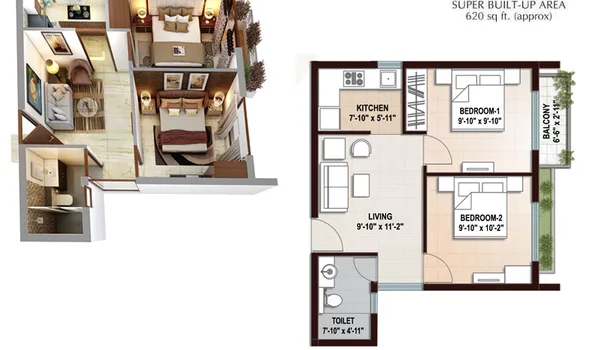
Verify the project's K-RERA registration and completion status before structuring any sale. A transaction at a Bengaluru sub-registrar office requires PAN for both parties. Review unit specifics on the floor plans page, check cost-of-ownership data on the price page, and reach the developer through the contact page for project status updates relevant to your exit timeline.
Planning the Sale to Stay Compliant
A clean exit from a Sarjapur Road apartment requires action on several fronts: confirming whether the gain is STCG or LTCG by the holding-period count; deciding which LTCG computation method applies and which is more beneficial (for pre-July 23, 2024 acquisitions, the two-route comparison); checking whether a Section 54 or 54EC exemption is available and feasible; ensuring the buyer fulfils the TDS deduction and Form 26QB filing; and ultimately reporting the capital gain correctly in the income-tax return for the financial year of the sale.
Maintain a complete paperwork trail from the date of purchase: allotment letter, registered purchase deed, all payment receipts, home-loan sanction and closure letters if applicable, and receipts for any documented capital improvements. Keep originals in a safe location separate from the apartment — if the property is damaged those documents may be the only proof of cost. Share complete records with a chartered accountant before the sale, not after. Many tax-saving options require decisions to be made at or before the time of sale; retrospective restructuring is rarely possible under tax law.
Frequently Asked Questions
1. How long must I hold an apartment before long-term capital gains tax applies?
Hold for more than 24 months from purchase for LTCG. Selling within 24 months means the gain is short-term and taxed at your applicable slab rate; more than 24 months qualifies as LTCG at 12.5% without indexation or 20% with indexation, depending on your acquisition date.
2. What is the cost inflation index and how does it reduce my tax?
The CII is a government-notified figure that inflates your original purchase cost, reducing the taxable LTCG under the 20% route. For property bought before July 23, 2024, you may compute tax under both routes — 20% with indexation and 12.5% without — and pay the lower amount.
3. Can I save capital gains tax by buying another property?
Yes. Section 54 allows LTCG exemption when you reinvest the gain in one new residential property (purchased within 2 years or constructed within 3 years of sale), capped at Rs 10 crore from Budget 2023. Deposit in a Capital Gains Account Scheme if reinvestment is not complete before your ITR filing deadline.
4. What is TDS on a property sale and who deducts it?
Under Section 194-IA, the buyer deducts 1% TDS on any property sold for over Rs 50 lakhs and files Form 26QB within 30 days. You receive Form 16B as a TDS certificate and claim credit in your income-tax return.
5. Has the Finance Act 2024 changed how LTCG on property is taxed?
Yes. From July 23, 2024, LTCG on property is taxed at 12.5% without indexation. For property bought before that date, a transition provision lets you choose the lower of 20% with indexation or 12.5% without; only 12.5% applies to acquisitions on or after July 23, 2024.
6. What documents must a seller keep for capital gains computation?
Keep the original purchase deed, all payment receipts, the registered sale deed, receipts for capital improvements and Form 16B from the buyer. If claiming Section 54 exemption, also retain the new property's purchase deed and any Capital Gains Account Scheme passbook.
Conclusion
Selling a Sarjapur Road apartment triggers a capital gains tax event whose exact cost depends on how long you held the property, when you acquired it, and whether you use an exemption to reduce the gain. The 24-month holding-period threshold determines STCG versus LTCG. For LTCG, the Finance Act 2024 changed the rate to 12.5% without indexation from July 23, 2024, while giving sellers of pre-July 23, 2024 acquisitions the option to compare against the old 20%-with-indexation route and pay the lower amount. Section 54 allows full exemption on gains reinvested in one new residential property within the prescribed window, subject to a Rs 10 crore cap since Budget 2023; Section 54EC offers an alternative via capital-gains bonds up to Rs 50 lakhs per year. The buyer deducts 1% TDS on any sale above Rs 50 lakhs under Section 194-IA, which the seller credits against the final tax liability in the income-tax return. Maintain complete purchase-to-sale documentation, engage a chartered accountant before the transaction, and verify the project's K-RERA status and your unit's area and cost data before finalising the exit.
Prestige Sarjapur Road Blog