Green & Eco-Friendly Apartments in Sarjapur Road 2026
Published 15 Jul 2026 · Last updated 15 Jul 2026
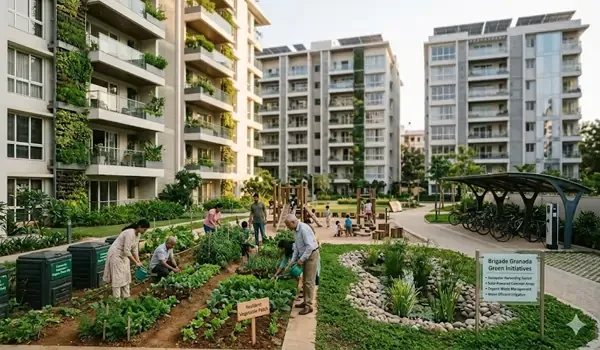
Buyers researching gated communities on Sarjapur Road increasingly ask about green features — and rightly so. A sewage treatment plant, rooftop solar, rainwater harvesting or EV charging provision in a project is not just a marketing tag; it directly affects your monthly utility bills, your community's resource self-sufficiency and, increasingly, the resale appeal of the flat. In Bengaluru's context — where water supply is under pressure, power tariffs rise regularly and EV adoption is accelerating — these features have moved from optional to expected in well-managed gated communities. This guide explains what each green feature does, what India's main rating system covers and the right questions to ask a developer before you book.
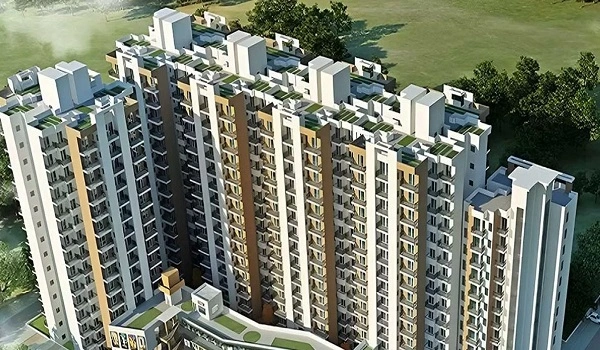
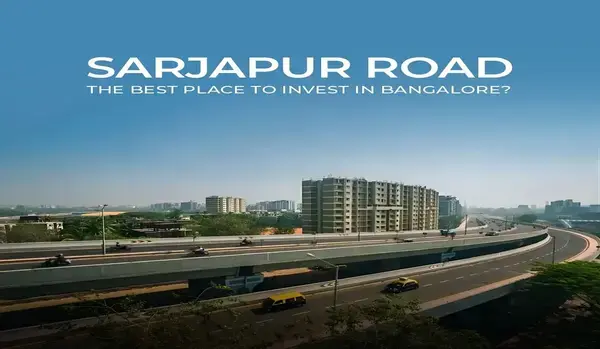
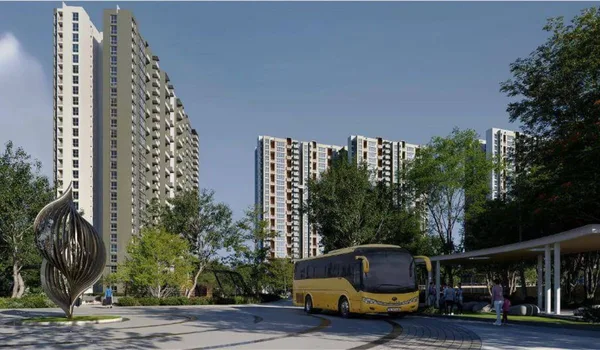
Our featured pre-launch on the corridor, Prestige Sarjapur Road by Prestige Group, offers 1, 2 and 3 BHK homes from about ₹68.25 L at Ittangur. For specific sustainability features or certification details for this project, ask the developer directly through the contact page; do not rely on general descriptions in any guide for project-specific claims. For the wider corridor, see the Sarjapur Road guide.
What Makes an Apartment Green?
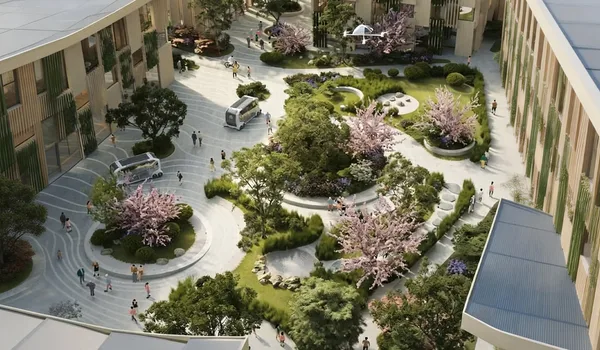
A green or sustainable apartment building is one designed to reduce its consumption of energy, water and materials, and to minimise waste, compared to a conventional building of the same size. In the Indian residential context, this usually means a combination of site-level measures (reducing heat island effect, maintaining green cover, managing stormwater), water measures (sewage treatment and recycling, rainwater harvesting), energy measures (rooftop solar for common areas, energy-efficient lighting and building envelope design) and waste measures (on-site composting or waste segregation infrastructure). Any one of these features adds real value; the more that are built in together, the more a community functions as a self-sustaining system.
Green buildings are not just about environmental benefit — they translate to tangible cost savings for residents. A project with an on-site STP that recycles water for flushing and gardening reduces its municipal water bill. Rooftop solar offsets electricity costs for lifts, lighting and clubhouse operations, reducing maintenance charges or slowing their growth. Rainwater harvesting replenishes groundwater and reduces dependence on tankers during summer shortfalls. EV charging infrastructure avoids costly retrofits when residents upgrade to electric vehicles. These are operational savings that compound every month for the life of the building.
IGBC Green Homes Rating
The Indian Green Building Council's Green Homes rating system is the most widely used residential green building certification in India. It evaluates residential projects across five main categories: sustainable sites (landscaping, heat island reduction, stormwater management), water efficiency (STP, rainwater harvesting, water-saving fixtures), energy efficiency (building envelope design, artificial lighting, HVAC, renewable energy), materials and resources (construction waste management, locally sourced or recycled materials), and indoor environment quality (ventilation, daylight access, low-emission materials). Projects earn points in each category and are awarded a rating of Certified, Silver, Gold or Platinum based on total score.
IGBC certification requires third-party documentation and site audits at the pre-certification (design) and final (construction) stages. A project marketed as "IGBC registered" is in the process; "IGBC certified" means it has passed the final audit. Ask the developer for the certificate number and verify it on the IGBC portal if certification is a deciding factor. LEED for Homes (by the US Green Building Council, administered in India) is a parallel international standard that some projects pursue; it has broadly similar categories but different scoring thresholds. Both systems are credible; the IGBC Green Homes rating is more common for Indian residential projects. Green ratings are best verified independently — treat a developer's claim as a starting point, not a confirmed fact.
Key Eco-Features to Look For
The table below summarises the six most impactful green features in a gated apartment community, what each does and what to verify with the developer.
| Feature | What it does | What to ask the developer |
|---|---|---|
| Sewage Treatment Plant (STP) | Treats wastewater on-site; recycled water used for flushing and garden irrigation, reducing municipal water demand | STP capacity (KLD), what the treated water is used for, and whether it meets KSPCB norms |
| Rooftop solar panels | Generates electricity for common areas — lifts, lighting, water pumps — reducing power bills charged to the maintenance fund | Installed capacity (kWp), which loads it covers, and whether residents can opt for individual rooftop systems |
| Rainwater harvesting | Collects roof and surface runoff into recharge pits or a storage tank, replenishing groundwater and reducing tanker dependence | Storage capacity, whether it feeds a recharge pit or a holding tank, and the recharge points on the site plan |
| EV charging provision | Provides charging points or conduit provision in parking areas for electric vehicles | Whether chargers are installed at handover or only conduit is provided, how many points per flat or per parking bay, and the electrical load capacity |
| LED lighting in common areas | Replaces conventional lighting with LEDs across corridors, lobbies and landscape lighting, cutting electricity consumption materially | Whether LED fixtures are standard in all common areas and whether smart controls (motion sensors, timers) are included |
| Building envelope (insulation, glazing) | Design choices — wall composition, roof insulation, window glazing type — that reduce heat gain and lower air-conditioning load inside flats | Wall U-value, roof insulation specification and the glazing type (single, double or low-e) used on large external windows |
Why Green Features Matter for Buyers
The immediate impact is on monthly costs. A community with rooftop solar and an STP typically runs lower maintenance charges than a comparable-sized project without these systems, because common-area electricity and water bills are partially or fully offset. Over a 10-to-15-year holding period, this difference can be significant — especially as power tariffs and water charges trend upward. For a buyer planning to rent the flat, lower maintenance charges make the unit more attractive to tenants and can support a better net yield.
Resale is a growing consideration as well. Buyers and tenants are increasingly aware of green features, and projects that carry credible IGBC certification or have visible solar panels and green infrastructure tend to attract more interest in the resale market than comparable projects without these features. K-RERA registration ensures the project is legally compliant; green features add a layer of operational quality that K-RERA alone does not cover. From a regulatory standpoint, BBMP and Karnataka authorities have increasingly mandated STPs and rainwater harvesting for large residential projects, so many new gated communities on Sarjapur Road will include these as standard rather than optional — but the quality of implementation varies, and that is what the questions below help you verify.
Questions to Ask Before Booking
Use the checklist below when speaking to a developer or site representative. A developer who can answer these specifically — with numbers, specifications and timelines — is more likely to have genuinely built these features into the project plan rather than simply including them as marketing language.
| Question | Why it matters |
|---|---|
| Is the project IGBC Green Homes rated? What is the certificate number and rating level? | Distinguishes certified projects from those with uncertified green claims; verifiable on the IGBC portal |
| What is the STP capacity and what is the treated water used for? | Confirms on-site water recycling is functional and sized for the project population |
| What is the rooftop solar capacity (kWp) and which common-area loads does it cover? | Gives a real sense of how much the solar offsets common-area electricity costs |
| Where are the rainwater harvesting recharge pits or tank on the site plan? | Checks that the system is designed into the layout, not added as an afterthought |
| Are EV charging points installed at handover, or is only conduit provision made? | Conduit provision means the buyer must install the charger separately and at their own cost |
| What is the green cover or landscape area as a percentage of the plot? | Higher green cover reduces urban heat island effect, lowers ambient temperatures and signals a well-designed project |
Frequently Asked Questions
1. Are there green-certified apartments in Sarjapur Road?
Several gated community projects on Sarjapur Road include sustainability features such as STPs, rooftop solar, rainwater harvesting and EV charging points; IGBC or LEED certification status varies by project and should be confirmed with each developer before booking.
2. What is IGBC Green Homes rating?
IGBC Green Homes is a rating system by the Indian Green Building Council that certifies residential projects across categories including site sustainability, water efficiency, energy efficiency, materials and indoor air quality. Projects are rated Certified, Silver, Gold or Platinum depending on the points scored.
3. What eco-features should I look for in a gated community?
The most impactful features are a sewage treatment plant for water recycling, rooftop solar panels for common-area electricity, a rainwater harvesting system, EV charging provision in the basement or parking areas, and LED lighting throughout common spaces. Confirm which of these are built in and which are planned for future phases.
4. Does green certification affect resale value?
Green-certified buildings tend to attract buyers and tenants who value lower utility costs and environmental standards, which can support resale value and rental demand over time. The benefit commanded varies by market maturity and buyer awareness, and is not guaranteed.
5. What is a sewage treatment plant and why does it matter?
A sewage treatment plant (STP) processes wastewater on-site and recycles it for uses such as garden irrigation and toilet flushing, reducing dependence on municipal supply and lowering water bills for the community. In large gated communities, an on-site STP is effectively a requirement for sustainable water management.
6. Should I ask the developer about EV charging points?
Yes — with electric vehicle adoption growing, EV charging infrastructure in the basement or parking zones is increasingly a practical need rather than a marketing feature. Ask whether EV charging is built in from possession, or whether conduit provision is made for future installation.
Conclusion
Green and eco-friendly features in a Sarjapur Road apartment are no longer niche extras — they are increasingly standard in well-designed gated communities and directly affect monthly costs, resale appeal and long-term liveability. The six most impactful features to look for are a functioning STP with water recycling, rooftop solar covering common-area loads, rainwater harvesting, EV charging provision, LED common-area lighting and a well-designed building envelope. IGBC Green Homes certification provides independent third-party verification of these features; ask for the certificate number and verify it before giving weight to any certification claim. Use the question checklist in this guide when speaking to developers, and get answers in writing where possible. Review Prestige Sarjapur Road's floor plans and price list for specifications, and contact the developer through the contact page to ask about the project's specific sustainability features before booking.
Prestige Sarjapur Road Blog